
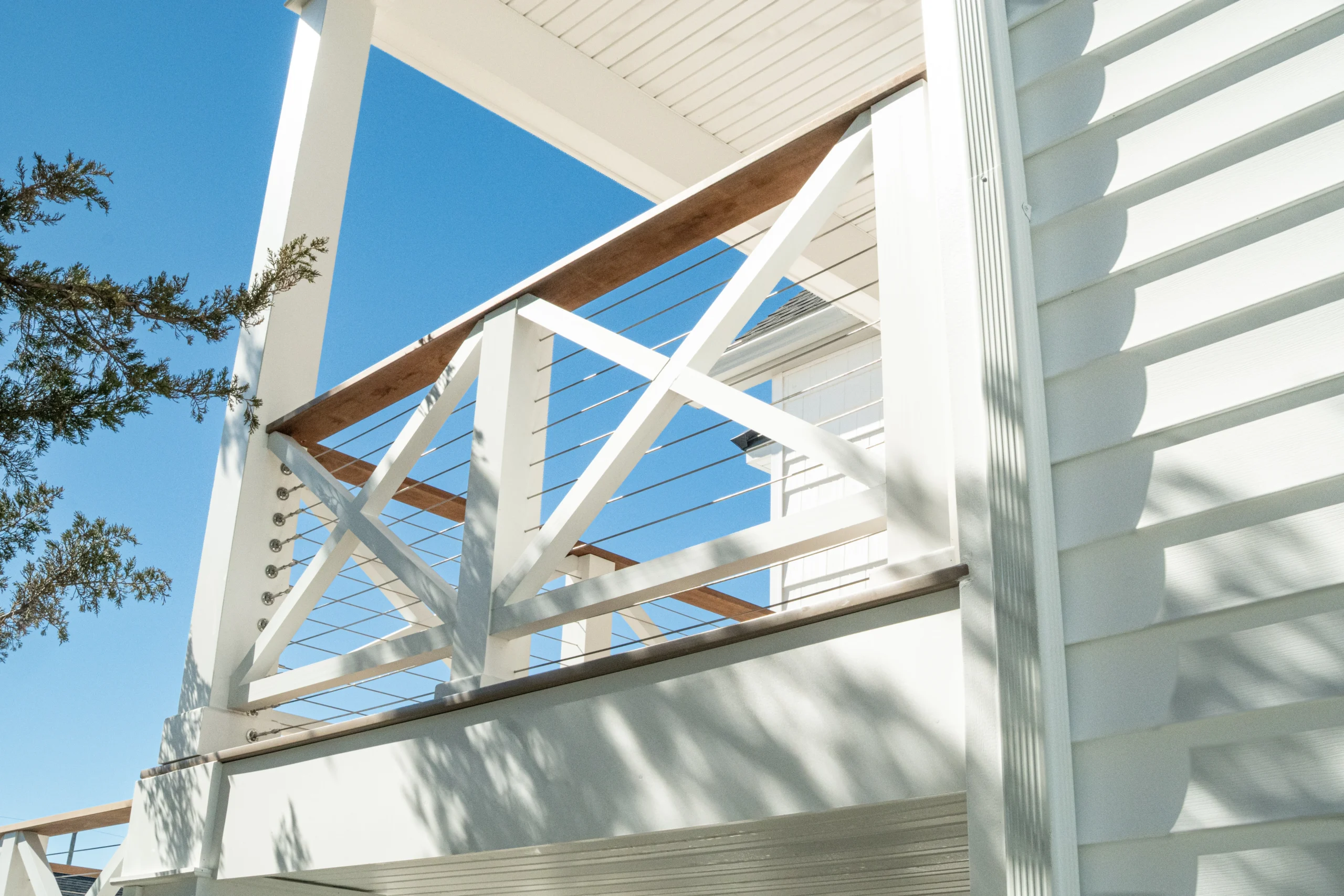
The aluminum reinforcement inside each rail and post is fully encapsulated by the PVC. Nothing is exposed to the elements. The fasteners are hidden stainless steel, so there are no screw heads or bracket faces sitting out in the salt air waiting to corrode and leave rust streaks down your post.
The finish is matte, not glossy. It looks like painted wood millwork rather than plastic. You can cut it, rout it, and drill it the same way you’d work with real wood, which gives us flexibility on custom builds where standard profiles don’t always fit. INTEX backs the product with a 25-year limited warranty and it’s code-approved for spans up to 12 feet.
If you’ve read our post on custom exterior features for coastal homes, you know we think about every exterior component as part of a system. Railing isn’t an afterthought any more than your deck edge detail is. Same philosophy applies here: the material you choose for railing affects how the whole exterior holds up and looks five, ten, fifteen years from now.
We’re not going to tell you that every railing project needs INTEX.
Standard vinyl railing works fine in a lot of situations. A covered porch with minimal weather exposure. An inland home that doesn’t deal with salt. A rental property where the budget needs to stay tight and the railing just needs to look clean and meet code. Vinyl gets the job done at roughly half the material cost, and for those applications, it’s a perfectly reasonable choice.
The problems we see with standard vinyl show up in specific conditions: direct UV exposure over years, salt air, moisture getting trapped in hollow cavities, and the exposed metal framing that most vinyl systems rely on. If you’re building in a protected environment without those stressors, standard vinyl can last a long time without issues.
Brigantine is not a low moisture town. It’s a barrier island with salt air hitting every exterior surface year-round. Wind-driven salt spray, summer UV, temperature swings from January to August, and the occasional nor’easter that puts everything to the test.
Here’s what we’ve seen happen with standard vinyl railing systems on coastal homes over time:
INTEX prevents all of that. The cellular PVC doesn’t have hollow cavities for moisture to collect in. The aluminum reinforcement is sealed inside the material where salt can’t reach it. The hidden stainless steel fasteners won’t corrode or stain. And the material itself is formulated to resist UV fading and won’t become brittle the way hollow PVC does.
Additionally, a fun fact worth mentioning: thermoplastic railing was literally invented at the Jersey Shore in the early 1990s to combat salt-air. The first systems installed are still standing and functional over 30 years later. The technology was born out of exactly this problem, because wood railing on shore homes was a maintenance nightmare, and it has only gotten better since which is exactly why each McHugh Built home opts for INTEX.
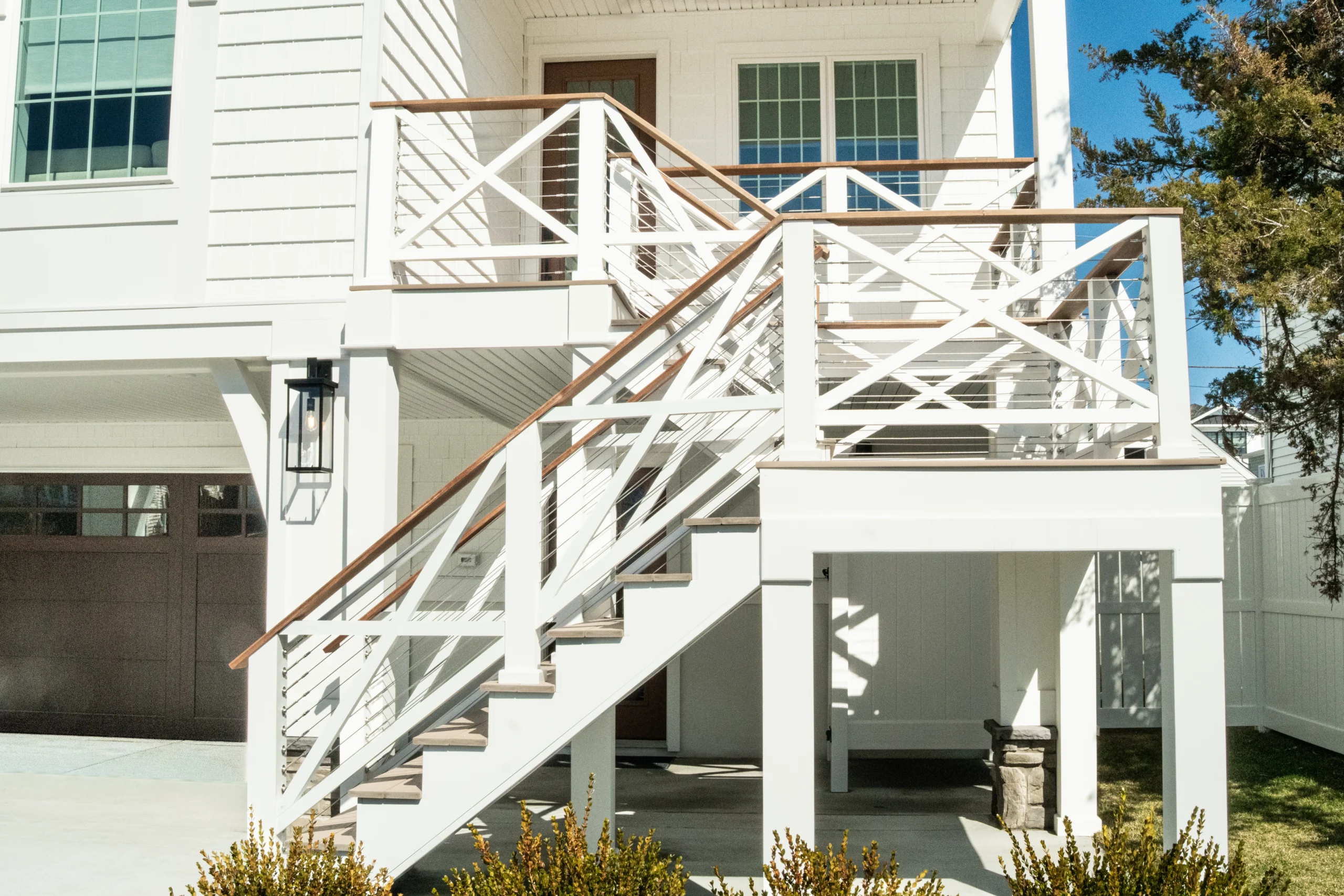
If you’re building or renovating on the coast and the railing will be exposed to salt air and direct weather, INTEX or a comparable cellular PVC system is the right call. If you’re working on an inland project, a covered porch, or a budget-driven renovation where longevity in harsh conditions isn’t the primary concern, standard vinyl will serve you well.
For our Brigantine builds, the answer is straightforward. We spec INTEX because it matches the quality standard we hold for the rest of the home. If you’re planning a build or renovation and want to talk through material choices for your specific project, give us a call at (609) 513-9269.
Reach out today and Ted McHugh will be in touch very soon!